
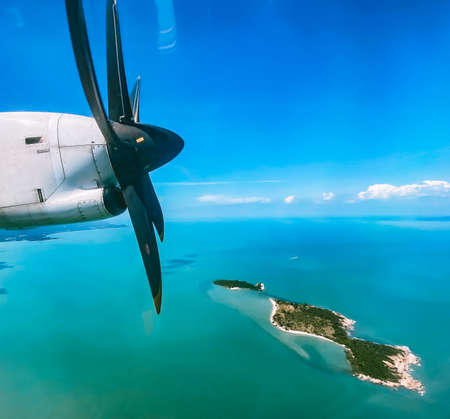
Bangkok Airways: The Boutique Airline Making Every Journey Special
Imagine this: you’ve finally booked that long-awaited trip to Thailand. Your camera roll is ready, your appetite is ready, your “Out of Office” is definitely ready. But then you hit the part nobody romanticizes on Instagram: choosing flights. Tabs everywhere, hidden fees, “basic economy” that somehow feels like a punishment, and a checkout page that looks more like a puzzle than a purchase.
Now picture a completely different experience.
You open one site. You see clear fares, real service, and routes that actually make sense for travelers — especially if you’re hopping between islands and cities. You’re not just buying a seat from A to B; you’re buying a smoother journey through one of the most beautiful regions in the world.
That’s where Bangkok Airways — often known as Asia’s boutique airline — quietly steps in.(Bangkok Airways)
Let’s walk through why this matters for you, not in airline-speak, but in real traveler language.
1. Not Just Another Airline: What “Boutique” Really Means
Lots of brands call themselves “premium” or “full-service”. Bangkok Airways uses a different word: boutique. That isn’t just a slogan; it’s a whole strategy.(Bangkok Airways)
Think about a small boutique hotel versus a massive chain. The bed might not be made of gold, but the experience feels more personal:
- The staff remember your name,
- The décor actually has a personality,
- And you feel like a guest, not a number in a system.
Bangkok Airways takes that same philosophy and puts it in the air.
Instead of trying to fly everywhere on earth, it focuses on hand-picked destinations in Thailand and around the region — places travelers actually want to go: Bangkok, island gateways like Koh Samui, and key spots in nearby countries such as Cambodia, Laos, Maldives, Singapore and more.
So rather than being “just another airline”, it becomes something else:
A specialist in regional journeys where the flight is part of the trip, not just the boring bit in between.

2. Your Time vs. Your Ticket Price: The Hidden Equation
Let’s get analytical for a second.
When you book a flight, you probably look at the price first. Totally normal. But think about what you’re actually paying for — not just in money, but in time and stress:
- Extra charges for baggage at the airport
- Paying for water or snacks on board
- Long layovers that destroy your first or last day of vacation
- Confusing connections between airports that weren’t designed for easy transfer
All of those little annoyances are costs too. They just don’t show up on the checkout page.
Bangkok Airways positions itself on the other side of that equation. On many routes, you’re not just buying a seat; you’re getting a full-service fare that typically includes things like:
- A checked baggage allowance
- In-flight meals or snacks
- Seat selection options
All built into the ticket.(Bangkok Airways)
So the question changes from “What’s the cheapest?” to “What gives me the best value when I add everything up?”
Most travelers only realize this difference at the worst possible moment — standing at the airport, credit card in hand, paying for a bag they thought was included. With a boutique full-service carrier, the costs are more transparent, and the surprises are the good kind.
3. Designed for Travelers, Not Just Routes on a Map
Bangkok is a major hub. Suvarnabhumi Airport connects you to the rest of Asia and the wider world. Bangkok Airways uses that hub not just as a dot on a map, but as a launch pad for exploring the region.
Here’s what that looks like in your real life:
- Flying long-haul into Bangkok and then hopping to Koh Samui for beaches
- Heading up to Sukhothai or Chiang Mai for culture and history
- Continuing onward to places like Cambodia or Laos to expand your trip into a multi-country journey
Instead of treating each flight as a separate problem you have to solve, Bangkok Airways bridges them into a more coherent itinerary.
It’s like having someone connect the dots for you:
you still choose the picture, but the lines are already drawn.

4. The “Own Airports & Lounges” Advantage (That Most Travelers Miss)
Here’s a detail a lot of people don’t even know: Bangkok Airways actually owns and operates some of its own airports, such as Samui and Sukhothai.
Why does that matter?
Because when an airline controls its own ground experience, it can shape more of your journey:
- Boutique terminals that feel calmer and more curated than crowded mega-hubs
- Consistent service standards from check-in to boarding
- Infrastructure built with resort and leisure travelers in mind, not just business traffic
On top of that, Bangkok Airways is well known for offering lounges for economy passengers on many routes — something you don’t usually see outside premium cabins.
Think about the difference:
One scenario is you sitting at a random gate on a metal chair balancing a takeaway coffee on your backpack.
The other is you sitting in a lounge with Wi-Fi, refreshments, and a quiet space to reset between flights — even if you’re not flying business.
It’s a small shift that changes how the whole day feels.
5. Service as a Strategy, Not Just a Smile
Every airline tells you they care about service. But with Bangkok Airways, service isn’t just a nice extra; it’s part of the business model.
Their vision talks about being a leading airline in Asia, but the way they plan to get there is through consistent, personal service and reliability — not just by adding more planes or going ultra-cheap.
That shows up in a few practical ways:
- Full-service on short regional hops
Many carriers treat short flights like bus rides: get on, sit down, get off. Bangkok Airways leans into making even a one-hour leg feel like a proper flight—meals, drinks, cabin care. - Clear product positioning
They’re not trying to fight every low-cost airline on price alone. Instead, they sit in a sweet spot: more comfortable and more inclusive than a budget carrier, often at a fare that still feels accessible. - Focus on repeat travelers
When an airline runs its own airports, lounges, and frequent-flyer program, it has a long-term interest in you coming back — not just clicking “buy” once. That tends to align incentives: happier passengers are good business.
In other words: the service isn’t just about being “nice”. It’s a strategic decision. And you benefit from that decision on every leg.

6. Let’s Talk About the “Feel” of the Journey
All the technical talk aside, travel is emotional.
We remember:
- the way the cabin lighting made us feel,
- the warmth (or coldness) of the crew,
- whether we arrived stressed or calm.
Bangkok Airways brands itself as Asia’s boutique airline for a reason: that word “boutique” pulls in a certain expectation — detail, warmth, intimacy.(Bangkok Airways)
Think of it like this:
- A big global carrier can feel like a shopping mall — huge, efficient, but not always personal.
- A boutique airline feels more like a curated concept store — smaller, more deliberate, and focused on a particular kind of customer.
You’ll feel that especially if you’re:
- Island-hopping and taking multiple short flights
- Traveling as a couple or family and want the trip to feel special, not just functional
- Combining work and leisure and need your flying days to be productive, not draining
The goal isn’t just to move you from airport to airport.
It’s to make your travel days feel like part of your vacation, not days you have to “get through”.
7. Comparing Options: Low-Cost vs Boutique
Let’s put emotion aside for a moment and break this down like a spreadsheet.
With a typical low-cost carrier, you often get:
- A base fare that looks very cheap at first glance
- Extra charges for checked bags, sometimes even large cabin bags
- Fees for seat selection
- Paid food and drinks on board
- Minimal flexibility if your plans change
This can be perfect if you’re traveling very light, have fixed dates, and don’t mind a bare-bones experience.
With a boutique full-service airline like Bangkok Airways, you typically get:
- A more inclusive fare (baggage, meals, sometimes free seat selection
- A more comfortable onboard experience on short regional hops
- Lounges or upgraded ground experience at key airports
- A network designed around leisure and regional travel, not just major capital cities
When you add up total cost + experience + time saved, the full-service option can end up being surprisingly competitive — sometimes even cheaper once you factor in all those “optional extras” that are actually not optional in real life.
It’s a bit like buying “cheap” shoes that fall apart in six months vs. mid-range shoes that last for years. The price tag is not the whole story.
8. Multi-Destination Trips: Where Bangkok Airways Quietly Shines
If your plan is simple — say, Bangkok in, Bangkok out — almost any airline will do. But if you’re thinking bigger, like:
- Bangkok → Koh Samui → Chiang Mai → Luang Prabang
- Bangkok → Maldives for a resort escape
- Bangkok → Angkor Wat (via Cambodia)
…then the structure of the airline’s network suddenly matters a lot.
This is where Bangkok Airways is built to be useful:
- It connects tourist destinations to each other, not just to one big hub.
- It allows you to stack multiple short flights into a single, coherent itinerary.
- It reduces the need to backtrack unnecessarily through overcrowded airports.
If you think of your trip like a sentence, Bangkok Airways helps you add commas, exclamation points, and side notes — without the sentence falling apart.

9. Digital Ease: Booking Without the Headache
We don’t talk about websites much when we romanticize travel. But let’s be honest: if the booking process is a nightmare, your enthusiasm for the trip drops.
A good airline website should:
- Make it easy to see the total cost early
- Show you clear schedules and connection times
- Help you manage your booking, not bury the options under hidden menus
Bangkok Airways’ digital experience is built around direct booking for regional routes — so you’re not picking through hundreds of irrelevant options. You choose an origin, a destination, and you see a focused set of flights to match.
It sounds simple, but in a world of over-complicated fare classes and cryptic route maps, that kind of simplicity is a competitive advantage in itself.
10. Who Is Bangkok Airways Especially Good For?
Let’s be specific. If you see yourself in any of these descriptions, you’re the kind of traveler who will probably get above-average value out of choosing a boutique regional airline:
- Island Hoppers
You’re dreaming of Koh Samui, maybe Koh Phangan or nearby regions. You want flight times that line up with check-in and checkout times at resorts, not 3 a.m. departures that turn your first day into a zombie walk. - Vacation Optimizers
You don’t have unlimited days off. Every day counts. You’re willing to pay a bit more upfront if it means fewer layovers, smoother transitions, and less airport chaos. - Comfort-Focused Yet Budget-Aware
You’re not trying to burn money, but you’re also not excited about fighting for overhead bin space and paying for water. You want a reasonable middle ground: not ultra-luxury, but clearly better than bare-bones. - Multi-Country Explorers
You want to stitch together Thailand + another country (Cambodia, Laos, Maldives, Singapore and more). A regional specialist carrier that already flies those routes makes planning far easier.
If at least one of those sounds like you, it’s worth seriously considering Bangkok Airways when you build your next itinerary.
11. So… Should You Fly Bangkok Airways?
Let’s bring this all together.
No airline is perfect. Routes change. Schedules shift. You should always check the latest information before you book. But if we strip it down to fundamentals, here’s what you’re really choosing when you book with a boutique full-service carrier like Bangkok Airways:
- You’re choosing clarity over surprise fees.
- You’re choosing comfort and service as part of the base product, not as an optional add-on.
- You’re choosing a network built for regional travel and island escapes, not just for big-city business routes.
- You’re choosing a brand that has deliberately positioned itself as Asia’s boutique airline, and then actually built the lounges, routes, and service model to back that up.
In a market full of loud price wars and racing to the bottom, that’s quietly refreshing.
12. Your Next Step
If you’re planning a trip to Thailand or its neighboring countries, don’t just compare fares on autopilot. Do this instead:
- Sketch your ideal route: where you really want to go, not just what shows up first in a search.
- Look at how Bangkok Airways’ network fits into that map — especially for island or secondary city connections.
- Compare total trip value, not just the price in bold: baggage, food, time, comfort, and ease of connection.
- Ask yourself a simple question:
“Do I want this flight to feel like part of my holiday… or a hurdle I have to get over?”
If your answer is the first one, then Bangkok Airways is exactly the kind of airline that deserves a spot in your browser tabs — and, more importantly, on your boarding pass.
Because at the end of the day, travel isn’t just about where you’re going.
It’s about how you get there.
And flying boutique — instead of generic — might be the small change that makes your whole trip feel different.


You May Also Like

Are cruise ships now becoming too popular? |From Southampton to Bruges
Top 10 Budget Hotels in Las Vegas